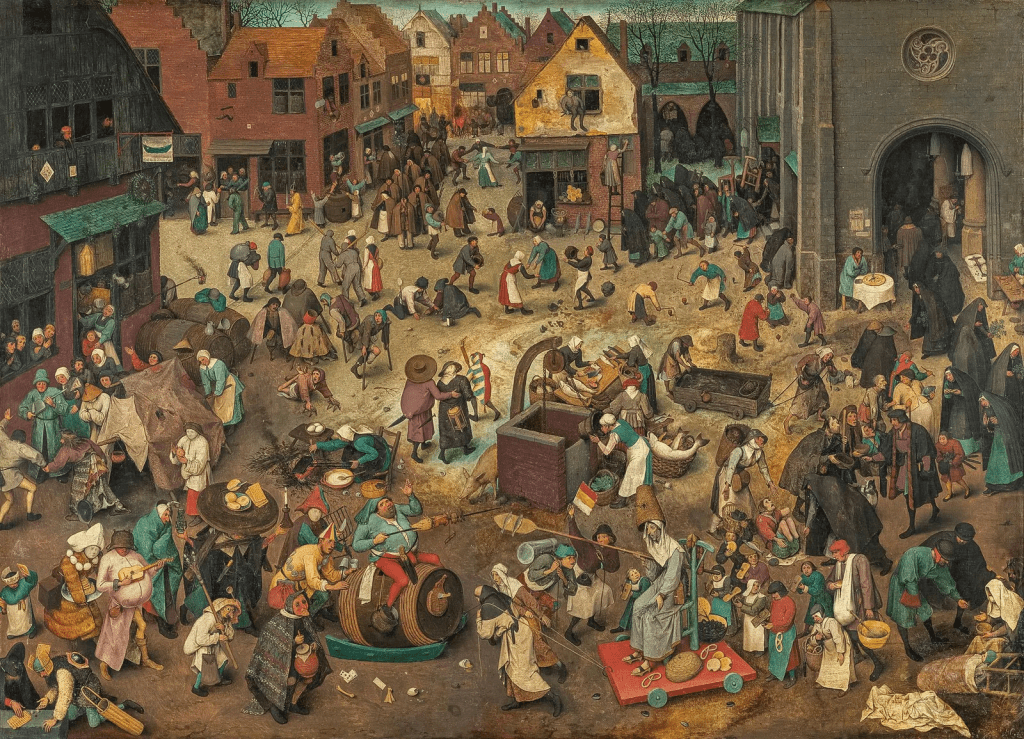
Two Ways of Spending an Hour
Someone looks at their phone for an hour. They are interested the entire time. They scroll through their Instagram, then their email, then their YouTube shorts, then their Instagram again (after all, they posted earlier and are checking to see who liked their post), then their TikTok, then their Instagram yet again. It’s easy and fun. It feels like relaxing, a full body and mind relaxation. They are encountering new, titillating things nearly every moment. Their eyes and mind linger on nothing for long. A short about diet. A short about building a fence. A short about a group of girls in bikinis at Spring Break. There interest feels insatiable, and they don’t realize how strange their activity would look to an observer, flickering quickly back and forth between wildly different images. When the hour ends, they look up from their phone and the world looks a little fuzzier, a little sadder, a little more grey.
Someone reads Anna Karenina for an hour. They are occasionally bored, or confused. Russian names are long, and they are pretty sure each character has three or four names, but they aren’t certain. But there is a good plot, and they like the characters. It’s a bit of a trial. And yet, there are those moments, ones where something is illuminated in a completely new way, like when Levin skates beautifully, not knowing that Kitty doesn’t love him. They understand something new in that moment, something inarticulable, at least until later reflection. There are even stretches where the minutes slip away–what first felt difficult, perhaps impossible–is suddenly easy and completely immersive. They see the characters, feel the things they feel. If it’s a man, they find that they’ve never seen a woman quite as deeply and truly, perhaps, as they see Anna; if a woman, they feel they understand something about the souls of good men and bad men through Levin and Oblonsky. When the hour ends, they look up from the book, and things are a little brighter, a little sharper, a little more clear.
What has the great work of art done? Imagining a third scenario might help.
Imagine a third scenario. Someone looks at the night sky over Lake Erie for an hour. They aren’t necessarily titillated, but there is a quiet engagement and wonder. They don’t know much about constellations, but they can make out the Big Dipper, and from time to time they see something pass overhead. Maybe it’s a shooting star. Maybe it’s a satellite, or an airplane, or a drone. The waves quietly lap on the shore. Their mind drifts in and out. They think of a mistake they made earlier, and they regret it, and then think about the future, or some pleasurable moment from the day, or a plan in the near or far future. Perhaps even the gestalt of their whole life may hit them. When the hour ends, they go inside and go to sleep, and the day is done.
So again, what has the art done? With John Senior, I would like to posit that the great art of Anna Karenina has done something like given you a vision of life in its totality. Your own life, your own personal experiences, your encounters with nature, can of course give you that to some degree, particularly if you reflect on these things constantly. But great art, great fiction, allows you to see the world through the eyes of a great artist who has considered their story and the people in it with intense, loving contemplation. You then, for the time you read the book, are given access to that very same contemplative, loving mind. From the pages of the book, you can then actually see your own life and experiences a little more clearly, learning to see things properly with the eyes of the heart.
Seeing in Two Dimensions
I’ll dive more fully into this when discussing character writing, but an important thing to note about phone use is this. One of the great promises of social media is its connectivity. The promise–people my age remember the promise, because it was given to us when we were children and the technology was new–was that you would connect even more with people. The utopian vision given us was that our communities would be even better, our friendships even stronger. We’d all grow closer to each other by interacting constantly online.
The issue (or one of the issues) was this–the way social media is designed, with every post and picture meant to be easily and quickly consumed, people on social media by necessity turn themselves into a sort of easily understood and digestible product. People frame themselves as the tough, masculine man who does things like hunting, or as the cool, adventurous girl who surfs and skateboards, or as the carnivore who only eats meat, attributing this to a full improvement of their entire life, or as the vegetarian who does the same, or as the tradwife, or a golf instructor, or a handyman who takes on outrageous projects, or whatever (you see many of the most popular influencers lean toward making themselves not simply 2-dimensional people, but 2-dimensional cartoons). People make themselves into 2-dimensional figures, easily understood and consumed for a quick turnaround for “likes”. This is what D.C. Schindler means when he talks about the nature of social media and “liking”. The likes are necessarily only surface-level attachments. We like very simply, easily understood things. We are in no way even given the opportunity to love these people because we actually do not know them, because people are in fact complicated and 3-dimensional, not 2-dimensional.
And if you use social media, you do it to yourself, essentially trying to market yourself for likes. If you do something other than this, attempting to show different sides of yourself, good and bad, interesting and not so interesting, you are either not very well-received because you haven’t created a true Brand of You, or even that is seen as a kind of ploy for attention, which it quite likely is.
So, when we look up from our phones, having ingested a 2-dimensional world that is something akin to a Halloween bag stuffed with different candies, always something new and delicious, never something nourishing, and we look up to the real world, our imperfect apartment, perhaps our spouse who we do have to see in 3-dimensions, our own lives which we certainly have to see in 3-dimensions (though we can try our darnedest to not through drugs or manipulating our circumstances with plastic surgery or whatever), well, it’s clear to see why actual real life would seem a little dull and dim. Who wants to eat a steak after they’ve stuffed their faces with Halloween candy?
Art & Contemplation
So why is art different? Why does it make life feel more rich, not less? It is because art teaches us to see. Like the Professor says in Fahrenheit 451, true art shows the “pores” in the face of life. It shows us reality in some way, by showing people in 3-dimensions (great art can also show an idealized figure, like the Hero, and can be great art in that way with a 2-dimesnsional figure who shows us what we could be–again, something we’ll get to when we fully discuss characters). Through its many layers (character, theme, symbol, plot, arcs, etc.) it can give a true, organizing picture of life itself. This is also what Flannery O’Connor means when she says that writing fiction (and I think, by extension, reading fiction) is a “plunge into reality” and is “very shocking to the system.” Fiction (and great art in general) has a way of plunging us deeper into the reality of life than we are actually accustomed to doing, which then makes our own lives much more interesting and loveable.
Ok! So how exactly does this happen?
The best art stems from richly observing life, reality, people, God, and stems out to its audience to give them those same qualities. A person who lives their life in reality, away from their phones, has a lot of raw material. They’ve encountered reality. The work of the artist is then to shape this raw material into a true whole. Great art, in a sense, shows us how life itself, reality itself, works and is. Beauty, and beautiful art, is “truth and goodness on the meeting ground of the sensible,” (D.C. Schindler).
One of, if not the deepest reality that the artist can perceive is the reality of love, of life wanting to give of itself, communicate itself, to all around it. As Peter Kreeft says, “Things are in love with other things…fire gives warmth, light gives clarity.” Things give of themselves to other things. There is a fundamental generosity and relational quality to being, and as the Catholic believes, this is one of the great truths God has revealed about Himself to us, that He is a relationship of love, the three Persons in constant communication of love with one another and with the world they created out of this same love.
So for a writer, the most important things we can do is to love our work into existence, and in particular, to love our characters into existence.
George Saunders is a contemporary author who has seen this very thing. He talks about a writer who writes the sentence “Bob was an asshole.” While at first, the sentence pleases the author with how direct, smug, and kind of humorous it is, the artist is ultimately displeased with the sentence. What did it mean that Bob was an asshole? How? Why? Eventually, the author, through revision (meaning, re-contemplation of the story and individual sentence) comes to something like “Bob snapped at the barista, who reminded him so much of his dead wife, whom he missed dearly.” The sentence and Bob and the worldview of the story have come into much sharper focus through this process of revising, of contemplating the story and its characters more and more deeply. Saunders and I agree that the only way to great art is this sort of contemplation in love, a viewing of the story with the eyes of the heart.
In fact, a way of thinking about creating art is that it’s a kind of contemplative map or board that you slowly, lovingly fill in and deepen.
You’ll find, for example, when writing in essay, that you discover more by the final draft than you had initially thought to put in. Ideas layer on, examples add up, new ideas emerge.
A similar thing happens when writing fiction. Tolstoy first conceived of the character of Anna as a wretched, ugly, fat, miserable woman through whom he could teach a moral lesson. But, along the way, he fell in love with her, and she became much more than that as a result.
The Renaissance
One of the reasons the Renaissance is perhaps the greatest period for visual art ever is because it captured more of reality than any other period. While the Middle Ages captured many deep, spiritual realities through its more highly-symbolic art, the Renaissance was able to marry those spiritual realities to material, bodily realities.
What is true of the Renaissance is true of the Victorian period in English literature, or more generally, the 18th/19th centuries in World Literature. Through their fictions, these great authors (Austen, Dickens, Eliot, Tolsoy, Dostoevsky, Checkhov, etc.) were able to capture very human life while marrying it to higher, spiritual truths and realities. They captured more of reality more truly than other eras (with brief, bright lights throughout the ages–the greats like Homer, Dante, Chaucer, etc.).
A False Worldview Harms the Art
Now, I didn’t always hold the view that should an artist’s worldview be wrong, their art would be seriously harmed. Beauty, I thought then, was completely disconnected from Truth, and so something could be beautiful and at the same time false. I think now that a falseness in worldview does serious damage to art.
If art is meant to reflect and organize reality, be a “deep plunge” into reality that sort of “shocks” us, wakes us up to our own lives and the things at stake, then a false worldview means a plunge into a false world, one that does not accurately reflect our own, and can thus either leave us wondering the point of reading something so wildly false or actively mislead our understanding about our life. I think about a few works in particular. One is Blood Meridian, one of Cormac McCarthy’s finest works. Many virtues of great writing are there. The story is intense, some of the characters are incredible, the language is unbelievably strange yet precise. There are scenes which are completely unforgettable, and a real power to the story. And yet, the worldview of the story is that evil is everywhere, goodness nowhere, and ultimately, we must submit to the nihilistic violence of man. Now, the depth of this lie, the weight of it, the intensity of it, is part of what gives the book its magnificent power. And yet, and yet. Ultimately, one must look up from the book and realize that love exists, that justice exists, that people sometimes do good for goodness’ sake. And one must conclude that they’ve just seen a wild, intense, but utterly false picture of the world, one that has given them, as a result, insight into very little. Worse, one may come to believe it, and perhaps come to respect, say, a school shooter, or a suicide bomber. This is why The Road, which I think gestures toward hope through the character of the son and the people who ultimately come to care for him after the father’s death, is, I think, a more complete, probably better work. It has a more complete worldview.
Something similar is seen in the difference between the film versions of The Lord of the Rings and Villeneuve’s Dune. In Dune, everything is about power. The Harkonnens want power, the Atreides want power, the Emperor wants power, the Fremen want power. Power is the controlling spirit of that world and that story. This is why, when Paul wins at the end of the movie, we basically feel nothing. Power, albeit good-looking power, has won out over another Power, a worse-looking power. The difference between the Atreides and the Harkonnens is basically aesthetic. If the Harkonnens had won, I don’t think we’d feel the depth of tragedy, because again, no deep tragedy would have occurred.
Now, in The Lord of the Rings, we get a much more complete picture of the world. Basically, in that story, there is good, and there is evil. Goodness manifests in characters who are virtuous, heroic, selfless, open to friendship and love, concerned for the past and the future, caring for the world. It manifests in architecture that is more humble, and even when grandiose, such as Minis Tirith or Helm’s Deep, seems to fit in naturally with the landscape, with the natural world, using material found naturally in the world around it, rocks and stones and granite. It manifests in people putting aside their lower concerns for some greater cause and good and in creative problem solving to complex situations. Evil, meanwhile, manifests in characters who are selfish, conniving, quick to betray, hungry for power. It manifests in architecture made out of metal, architecture that actually destroys the world around it in order to be made, with images of lava, fire, machinery, and so on. It manifests in a critical stupidity, a lack of sight even from an all-seeing eye which is blinded to humility, to the idea that someone would humbly do something good for another person. When the good guys triumph in this film, we are jubilant, elated. We see how true a victory this is. If Sauron had won, we would have sensed and felt the great horror and tragedy of this, all because it has been made clear what goodness really is and what evil really is.
So while both are excellent blockbuster movies, it seems that Lord of the Rings will be loved and cherished for much longer than Dune, and I think this genuinely stems from the former movie having a truer, fuller picture of the world. It is a better work of art because it is more true. As a result, when you watch Dune, you are entertained and probably even impressed, where when you watch The Lord of the Rings, you are entertained, impressed, and edified. The art has stepped up to match reality and your soul’s lofty desires.
Even imagine a much smaller example, say, the proclivity of people in horror movies to make incredibly dumb decisions. Everyone at a certain point notices this, and it harms the art, it harms the believability because it has become detached from reality. Moments like these in art make the audience take a step back from the work and test it against what they know about people and the world, and the art comes up wanting. Enough of these moments pile on, and the viewer is likely to simply close the book, turn off the tv, and do something else instead.
AI
I want to touch briefly on AI use in art. Basically, I hope that it’s clear from all the preceding that I think AI is the death of art. One way of considering this is by considering the artist themself, the person behind the art.
One could argue that AI merely does what humans do; it takes all the art it has ingested and turns out something new that is a kind of hybrid composite of all of those other things. AI has access to all the novels, short stories, and so on that we have (though hopefully in reality it actually doesn’t for the sake of artists owning their work), and it simply does exactly what we do.
However, this only describes part of what an artist does. Of course, a writer has hopefully read a lot of fiction, especially pursuing reading the “greats” as well as reading widely in things that they enjoy. Now, something is already critically different here. An artist actually encounters these things, wrestles with them in their mind, comes to love them or despise them in their heart. These are obviously things the AI cannot do. An AI has no relational capabilities because the AI itself is not a person. It has no soul. It doesn’t have the capacities for the highest orders of reasoning (exiting the Cave and coming to know reality through firsthand experience and thought), nor does it have access to the deeper reality of love and relationship. Similarly, an artist has actually lived a life and encountered reality and developed an actual point of view, all things the AI also cannot do, and even in theory, will never be able to do. So while there is a chance that AI-created false art will become bestsellers (though I really doubt that as well–AI slop is just that: slop–and even human slop like Wiseau’s The Room is far more compelling than AI slop), there is as much a chance for AI to write the next War and Peace as there is for a cockroach to do so.
Living in Reality
So a task of the beginner writer is to learn to see things properly. As John Gardner wrote that writers should watch as little tv as possible, watching only the really excellent stuff, so as to not start putting two-dimensional tv actions in their fiction, so would the fiction writer today do even better to stay off the Internet, AI, and particularly social media, as much as possible, lest they learn to see all people as 2-dimensional absurdities. These things will give you the wrong ideas about life and people, which will greatly diminish your art. Pay attention to reality, to your life, and for heaven’s sakes, read some philosophy and history. These things will all be touched on again later when I write on the writer’s vocation.
 Daniel Massett
Leave a comment