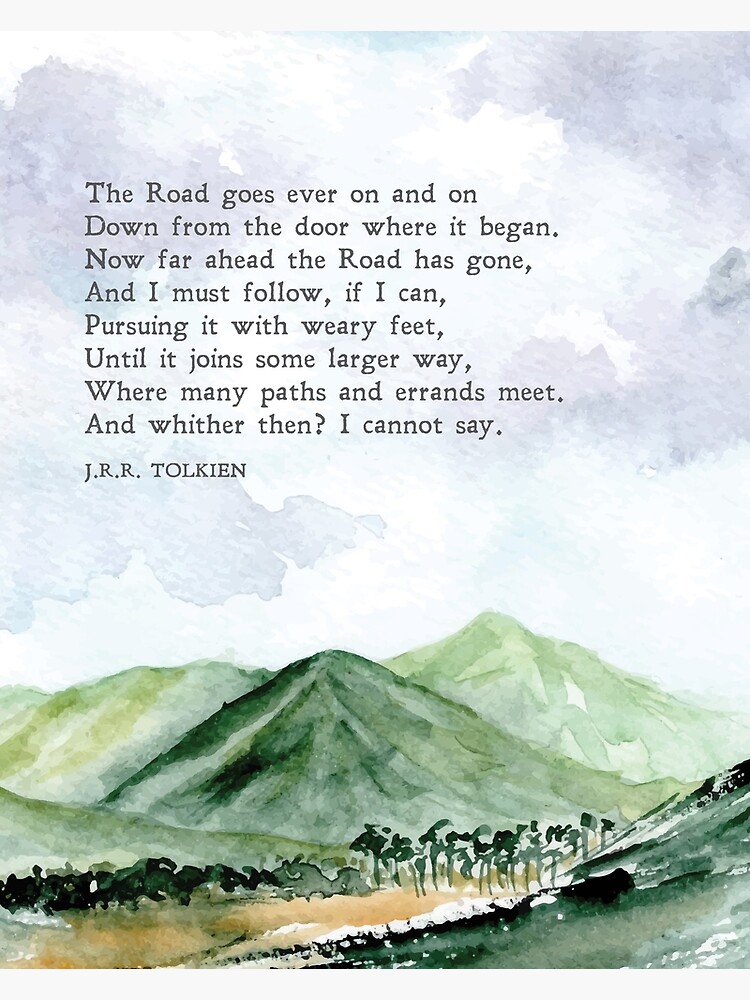
Having been a writer for well over a decade, having gone to a funded MFA, and having studied and taught literature for at least that same amount of time from K-12 to college students, I’ve decided to set down some thoughts on how to approach fiction writing. My hope is to write something approachable and unpretentious, yet still with the depth and scope that I think is necessary for anyone who has decided to start down the path of becoming a writer. ““It’s a dangerous business, Frodo, going out your door. You step onto the road, and if you don’t keep your feet, there’s no knowing where you might be swept off to.”
I hope these chapters will help almost as a map to a new writer. It will likely be particularly helpful to Catholic writers, as I’ll be speaking about writing from within that tradition. So while I’ll be using the greats like John Gardner, Robert McKee, Flannery O’Connor, Jody Bates, Brian Roley, Margaret Luongo, and George Saunders (among others) as my own writing mentors, I will also be pulling from the well of Catholic thinkers such as Aquinas, von Hildebrand (Dietrich and Alice), Josef Pieper, Benedict XVI, Jaques Maritain, and others to help deepen our understanding of beauty as a transcendental and path to God. I hope that doesn’t put non-Catholics off. We’ve had more than enough books come from a non-Catholic perspective on the subject (and many of these being wonderful books too!), but I think the Catholic tradition has much to contribute to the conversation–contemporaries like Joshua Hren have proven as much already.
I plan on separating these works into 3 broad sections. First, I want to cover what beauty and fiction even are. These will provide both the ground beneath our feet in setting out to create a work as well as, strangely, a destination we want to travel to as writers. If we understand beauty and its particular expression in fiction, we can better understand when our works are finished and what they are for. I think that, one way or another, we will have some understanding of these things, so it’s best that we have the correct understanding of them (as far as I’m capable of expressing it). The consequences of having an improper understanding of what fiction even is can lead to all sorts of strange aberrations, such as the highly ugly and political fiction we see winning awards today.
Next, I plan to go through an explanation of fundamentals. Once we have the destination and ground beneath our feet of a proper philosophy of fiction, we need to have our equipment needed for travel. We need to know what a character arc is, what a tragedy is, what a comedy is, how to create 2-dimensional characters or 3-dimensional characters, when to show and when to tell, what is a scene and sequence. Even things like how to write a great sentence, a great paragraph, and so on. My hope is to cover all the basics, everything necessary. Once the basics are down, an artist can fill in the corners, use the rules and break the rules, and all that.
Finally, I’d like to present an explanation of the writer’s life. What is it actually like as a journeyman writer, on the road, never knowing if anyone will read your writing? What does that life look like? How can you find contentment in the great not knowing of if you’ll ever be read, even as you try to get your work published? I’d like a beginning writer to know these things. I don’t know what it’s like to be a famous writer, but certainly, many of our famous writers have spoken and written about this experience as well, and we’ll take them at their word to try and understand why it is necessary to find contentment with no readership and how to do so. After all, even famous writers were once not so, and had to live in the same world of not-knowing.
I hope to put out about a chapter (blog post) per week or two on this, and that by the end of the year, we’ll have something like a complete work on this site that will be free to anyone who wanders in.
This will all be written in great appreciation for all the great writers and thinkers who came before me and wrote about these things. I’ll simply be synthesizing them and giving my own perspective. I don’t want to simply regurgitate Save the Cat, or simple (and often incorrect) aphorisms like “Show, don’t Tell.” Rather, I aim to put together a comprehensive look at fiction writing and the life it entails for the beginner, or simply anyone curious as to what writers actually do.
 Daniel Massett
Leave a comment