Tag: books

  • Fiction Writing for Beginners: Introduction

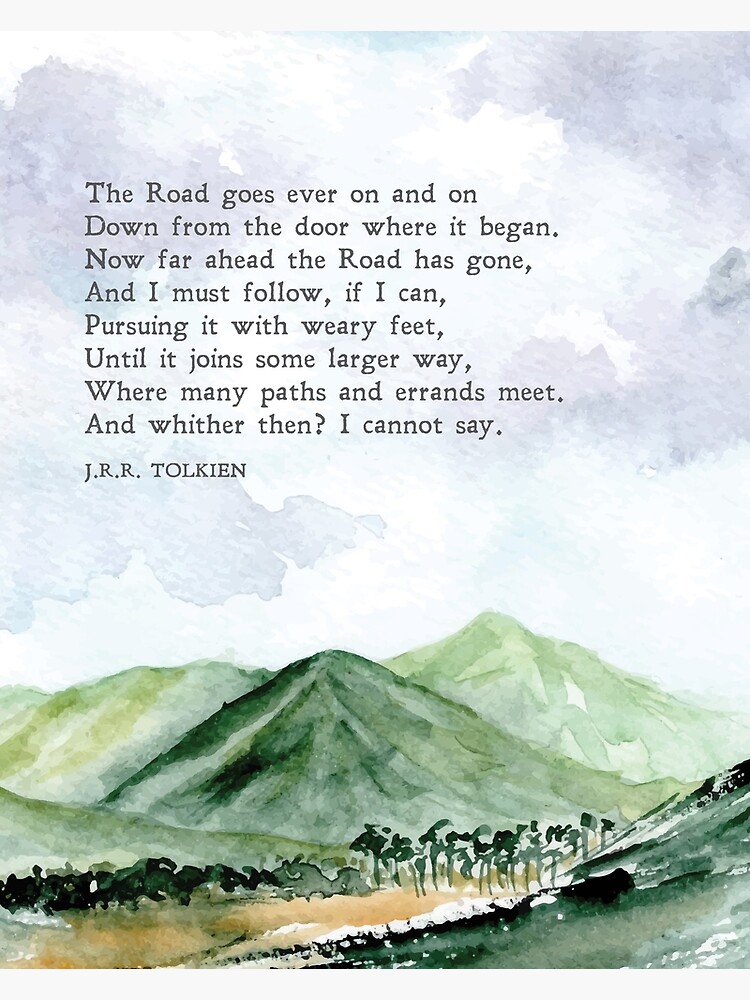
    Having been a writer for well over a decade, having gone to a funded MFA, and having studied and taught literature for at least that same amount of time from K-12 to college students, I’ve decided to set down some thoughts on how to approach fiction writing. My hope is to write something approachable and unpretentious, yet still with the depth and scope that I think is necessary for anyone who has decided to start down the path of becoming a writer. ““It’s a dangerous business, Frodo, going out your door. You step onto the road, and if you don’t keep your feet, there’s no knowing where you might be swept off to.”

    I hope these chapters will help almost as a map to a new writer. It will likely be particularly helpful to Catholic writers, as I’ll be speaking about writing from within that tradition. So while I’ll be using the greats like John Gardner, Robert McKee, Flannery O’Connor, Jody Bates, Brian Roley, Margaret Luongo, and George Saunders (among others) as my own writing mentors, I will also be pulling from the well of Catholic thinkers such as Aquinas, von Hildebrand (Dietrich and Alice), Josef Pieper, Benedict XVI, Jaques Maritain, and others to help deepen our understanding of beauty as a transcendental and path to God. I hope that doesn’t put non-Catholics off. We’ve had more than enough books come from a non-Catholic perspective on the subject (and many of these being wonderful books too!), but I think the Catholic tradition has much to contribute to the conversation–contemporaries like Joshua Hren have proven as much already.

    I plan on separating these works into 3 broad sections. First, I want to cover what beauty and fiction even are. These will provide both the ground beneath our feet in setting out to create a work as well as, strangely, a destination we want to travel to as writers. If we understand beauty and its particular expression in fiction, we can better understand when our works are finished and what they are for. I think that, one way or another, we will have some understanding of these things, so it’s best that we have the correct understanding of them (as far as I’m capable of expressing it). The consequences of having an improper understanding of what fiction even is can lead to all sorts of strange aberrations, such as the highly ugly and political fiction we see winning awards today.

    Next, I plan to go through an explanation of fundamentals. Once we have the destination and ground beneath our feet of a proper philosophy of fiction, we need to have our equipment needed for travel. We need to know what a character arc is, what a tragedy is, what a comedy is, how to create 2-dimensional characters or 3-dimensional characters, when to show and when to tell, what is a scene and sequence. Even things like how to write a great sentence, a great paragraph, and so on. My hope is to cover all the basics, everything necessary. Once the basics are down, an artist can fill in the corners, use the rules and break the rules, and all that.

    Finally, I’d like to present an explanation of the writer’s life. What is it actually like as a journeyman writer, on the road, never knowing if anyone will read your writing? What does that life look like? How can you find contentment in the great not knowing of if you’ll ever be read, even as you try to get your work published? I’d like a beginning writer to know these things. I don’t know what it’s like to be a famous writer, but certainly, many of our famous writers have spoken and written about this experience as well, and we’ll take them at their word to try and understand why it is necessary to find contentment with no readership and how to do so. After all, even famous writers were once not so, and had to live in the same world of not-knowing.

    I hope to put out about a chapter (blog post) per week or two on this, and that by the end of the year, we’ll have something like a complete work on this site that will be free to anyone who wanders in.

    This will all be written in great appreciation for all the great writers and thinkers who came before me and wrote about these things. I’ll simply be synthesizing them and giving my own perspective. I don’t want to simply regurgitate Save the Cat, or simple (and often incorrect) aphorisms like “Show, don’t Tell.” Rather, I aim to put together a comprehensive look at fiction writing and the life it entails for the beginner, or simply anyone curious as to what writers actually do.
  • Death Stranding and the Hidden Cost of Civilization

    Much has been said about the role of the violent man in the building of civilization. This is the theme meditated on in Red Dead Redemption, Logan, Seven Samurai, and Shane, among others. In these narratives, a violent man is given a violent task. This violent task, if completed, will greatly benefit civilization and civilized people. In RDR, for example, a disbanded gang of outlaws must be taken out in order for the Wild West to be settled. The great truth found in these stories is that violent men are necessary–but only for a time. When their time of violence is done, they are no longer needed, and they must be “put away” in order for non-violent civilization to flourish.

    While these stories play with characters who possess unsavory traits used for the good, there is another type of story, similar but distinct, in which there is a time for heroism, perhaps of a less violent nature, that also disappears. This story is told in My Antonia, in which the title character is a pioneer woman who has to give up the civilization of her father, a cultured man from Bohemia who loves music and isn’t cut out for pioneer life. While the cultured father perishes quite early in the book, Antonia thrives, openly forsaking elements of her femininity in order to become physically strong to dig and build and care for her family. She is the feminine version of the violent man. My Antonia praises her for being the exactly right person for the exactly right time, and again, as pioneers are no longer needed, she is a type of woman who is perhaps also “put away” in favor of the cultured woman. However, she is not violent and possesses many heroic virtues. To give a final example that illustrates the spectrum, it is also the story of Lonesome Dove, about a group of former Texas Rangers who, having settled the West, no longer have anything to do. They start the novel in limbo, then take on an adventurous cattle drive to Montana, which has no cattle, knowing that, once that drive is over, America will be well and truly settled, and their lives will be over. Violence is required of them at points, but so is heroism in other forms. In the end of that story, the two main characters both fail spectacularly at becoming civilized: one refuses to acknowledge his son as his own, and the other fails to embrace romantic love and the civilizing effect of that life.

    So, we have an archetype that appears again and again in stories of the person who is exactly the right person for that time and perhaps wrong for every other time. The tragic core of these stories is that, through their own actions, their way of life ceases to exist.

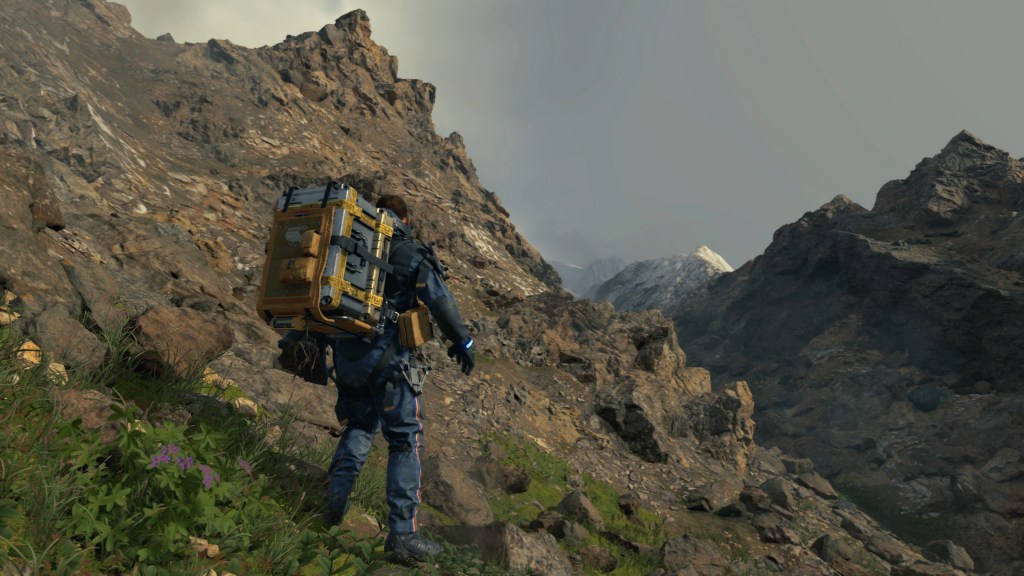
    This is the story of Death Stranding. To quickly summarize, hopefully without oversimplifying, you begin Death Stranding in a world where nature rules and civilization only exists in small pockets underground. You play as Sam Bridges, whose job is to brave the wilderness of this world in order to restore civilization. The gameplay mirrors this. The world is harsh and brutal, violent and unpredictable, difficult to traverse and difficult to comprehend. You have few simple tools–ladders and climbing anchors with short ropes attached. Like the best video game stories, you experience this story through the gameplay itself far more than through the cutscenes. You cross the world, which takes courage, inventiveness, prudence, fortitude. You do right by others however you can. You are a lone traveler in a desolate world, and only your inner strength carries you through.

    It is perhaps no surprise many drop the game at this point.

    However, as the game progresses, you learn you can help yourself and other players by building technological structures. To fast forward, these start off simple, making their way ultimately to roads and ziplines which allow you to, ultimately, quickly cross all the brutal terrain of the game. The process of building these roads and ziplines with other players is a tremendous joy, and seeing them go up, receiving likes from grateful players and giving them in return, is totally cathartic after the tens of hours spent struggling through the game.

    But, because of this, the game then grows stale. Deliveries are incredibly easy and simple. You drive the same roads over and over again. You take the same ziplines. Occasionally, you repair them. Monotony sets in, and you’ll likely get so bored of the game here that you stop playing. If not, you may complete the game, then, with nothing left to do, stop playing.

    So as to not belabor the point, this seems to be a reflection on the cost of civilization. Famous and oft-repeated is the anecdote that Plato himself thought that writing, one of civilization’s greatest inventions, would impair man, specifically in his ability to remember. While most of us, least of all me, would say we should do away with writing, it’s interesting to note that I rarely talk to people about their memories, to parents and grandparents about their experiences, their path through life, their way of understanding the world. These personal and collective memories fade, and we’re often left stranded on the island of Today and of Today’s news cycle, especially if we are not remarkably well-read. It seems Plato had a point.

    So much more the technologies of the day, which provide comfort and ease, but at costs that few, if any, have calculated. We are plunging headlong toward AI when we still haven’t reckoned with the potential damage television has done for our youth (or our adults, for that matter), and when we know that smartphones and social media are destroying us even as we continue to use them, like addicts with their preferred drug long after the moment of clarity and hitting rock bottom.

    These technologies rob us of ourselves if we let them. My writing students who turn to ChatGPT (assuming they aren’t caught) may end up with good to even great grades, which they probably think was the point of taking a writing class. But the point was actually to learn to think deeply and articulate yourself well. As I have said to many students many times, the point of a writing class isn’t to get a good grade on essays or even to learn to only write essays. Rather, it’s to learn how to express yourself so that you can write that Best Man or Maid of Honor speech, or that card of consolation to a grieving friend, or a eulogy to a parent or spouse or child. Life is simply too precious to hand over completely to technology and civilization.

    I’m not a luddite either, though I have flirted with the idea. I’m thankful for the heroes, whether Texas Rangers or soldiers in WWII or pioneer women or whoever, who made civilization possible. We need to accept and live up to that gift. And I am not a Manosphere type person who thinks men specifically need to reclaim ourselves through eating raw liver or whatever. Rather, we need to rediscover adventure. Adventure, the spirit of God and of life, comes to reach us all in our own particular station in life, even if the age of heroic adventuring of, say, Shackleton, is over (unless you’re going to get to Mars, which would be really cool). Perhaps you are a student, and the spirit of adventure is then to fully engage with academics, discover your life’s calling, find friendship and love, and so on. Perhaps you, like me, are married, and the adventure is to love your spouse through thick and thin, in good times and especially in bad times, and to have kids and raise them to be good people. Perhaps you’re a doctor, and the spirit of adventure calls you to develop yourself outside of work so that you can go back to your job refreshed instead of depressed. Perhaps you’re old, and the spirit of adventure is to continue developing your passions and to pass wisdom onto your children and grandchildren. Perhaps you’re a mother, and the spirit of adventure is to try to have a really great day with your kids. I don’t know (as a stay-at-home dad, that’s often my big adventure). All I know is that the spirit is ever-present and whispering to you. It tells you “You were not made for this” when you sit in front of the tv night after night, or doomscroll on your phone instead of listening to your friend right beside you, or when you take drugs and use people rather than get healthy and love someone. It tells you to do something even as you pop marijuana gummies and order Doordash and watch Friends reruns. You have heard this whispering voice. Heck, I have heard it when playing video games for too long rather than writing or reading.

    The point is, civilization, though it does its damndest, can never fully drown out the call to adventure. And in order to live, you have to heed the call.

    My last moments with Death Stranding, about a year before I thought of all this, was simply climbing a high peak in the game, looking at the sun, and then turning it off. I haven’t played it since. But my son and I have gone for many walks in the woods.

  • Fiction Writing and Conservatism

    Artists, it seems, are not typically conservatives. They seem to broadly fit into a lower-p progressive category, and indeed, it can often seem that most artists by and large despise the past.

    This is disconcerting as a fiction writer and something of a conservative, certainly of the lower-c order, of having a deep, abiding love for the past. I love the ways people have learned to live, the traditions, big and small, weird and wonderful, that have hung on. I love ritual and pageantry and holiday and leisure. I love that someone one hundred years ago may have read The Adventures of Huckleberry Finn as a boy and passed it down to his children, who passed it down to their children. I love that, not to get into the academic debate around the facts, a blind man named Homer spoke a poem called The Iliad thousands of years ago, and we have retold that poem ever since. It’s something like magic, something like proof that we have a soul, something like a “golden thread” connecting every single person in the West.

    Yet, a basic impulse of the artist is to long for the new. This is one of the reasons, I think, that artists flock to places like New York City, where a confluence of the entire world is always smashing together and breaking apart, and life always seems to find some new fusion, some new color, some new way of being that seems to offer unlimited potential for the creative, the artist of any practice, be it painting, or writing, or cooking, or building a building, or designing a dress. This is the raw stuff of creativity. The conservative artist may become too deeply distrustful of the present or future, and is then blocked off from this basic impulse.

    Or it is at least part of the artist’s basic impulse, though not all. The other part of it–it must be so–is loving the past. After all, why would you be a writer unless you had read something that moved you so deeply and so truly that you could not possibly find any other path forward in life but to write yourself? You must have loved someone else’s writing first, and then chosen to write. After all, you didn’t invent writing! You loved a writer, a work of fiction or nonfiction or poetry, and it knocked you so flat that when you arose, you had no choice but to pursue the very thing that left you horizontal. You must have loved food first, and then chosen to cook. You must have been inside one building and hated being there, then stepped inside another building and loved being there, and have been inspired to build a building yourself. You actually cannot separate yourself from that which came before. And in the same way, I find many great artists are those who stay put in their home, or whose writing stays put, and rather than examining the grand planned structures of a NYC examine the strange, well-worn yet illogical pathways of the small town, writers like Wendell Berry and Flannery O’Connor. I think of the image of Levin in Anna Karenina, who works his fields, which are a great mystery to him that he never tires of. Yet, I also love the NYC art, the bands like The Velvet Underground and The Strokes and Television, whom I saw live, and Geese, or a band like Vampire weekend, whom I’ve seen live twice, who seem to capture everything about modern life in a single song.

    The conservative artist, on the one hand, seems to always be attempting to recapture some past glory, or reimagine the past to be a place everyone should love the way they love, or explore some well-worn form. The progressive artist, on the other hand, seems to always be attempting to make the future through their art, either by creating utopias like those they would like to see, or at least, creating our world or future worlds or past worlds with progressive, utopian elements, or by ruthlessly criticizing our own contemporary world. Of course, there is much to dream of for the future, and there is much to be said for imagining into the past or criticizing the present, and it’s not a totally neat distinction, though it seems the distinction is there nevertheless.

    The issue, on both sides of the argument, is that we are looking at it all the wrong way. We must, like some strongman or superhero, straddling an enormous chasm, embracing two things which threaten to tear them apart, embracing both these impulses and looking beyond them. As Bob Dylan, always one to follow his own North Star, said at a political award ceremony as each side tried to claim him as their own, “To me, there is no Left or Right. There is only Up or Down, and I’m on my way Up.” What can this mean except that our own distinctions between Left and Right, progressive and conservative through the lens of politics or culture at large, are faulty in that neither constitute a real, three-dimensional, total worldview. They only mark what our two-party political system is pragmatically attempting to enact at any one place and time. This political worldview leaves no room for things too big for either party, like mystery, and love, and capital-T Truth, and capital-B Beauty, and right and wrong, and the rest.

    So, as with all things, the only way out is through.

    One has to read deeply and thoroughly–perhaps someone can enjoy Goethe and Geese–and also try to live their lives the best they can. This seems to be good advice for any person, and it is good advice for the writer specifically. Ideological thinking is one of the great generators of bad art. Ideological thinking is a combustion engine, and it fuels the writer down well-worn roads, none of which can will ever lead to the heights needed to write something that truly sees the whole picture.

    These roads lead only to specific sights, dependent on the place and time.

    Progressive art, at this moment, seems to lead only to sights of institutional racism, the evils of capitalism, the evils of men, the virtues of manlike women, the virtues of womanish men, the beauty of androgynous men and masculine women, the idea that all systems are only means of power, the benefits of throwing off the past, the destruction of old forms and the celebration of the new (how many short stories do we read that are in the form of a PowerPoint, or a job application, or a series of emails, or a baby name book, or a summary of every episode of Law & Order: SVU), and so on. We get art like Moonlight, or James, or The Rings of Power, or Everything Everywhere All At Once, or One Battle After Another. You’ll find that the progressive art considered great is always the thing made this year, or maybe a year before that, and it’s best if no one knows about it and it loses it’s cool when people do know.

    Conservative art shows us the familiar sights of pure good triumphing over pure evil, the virtues of manly men and womanly women, arguments between Christianity and Atheism where Christianity always triumphs, the benefits of Capitalism, the pitfalls of Communism, the endurance of old forms, and so on. We get art like God’s Not Dead, or The Chosen or “anything by C.S. Lewis.” You’ll find that most great art people call conservative was made at least 100 years ago, though the further into the past, the better. Of course, this means that some progressive art eventually becomes conservative art as the passage of time makes the past’s revolutions seem quaint and comforting and familiar.

    In fiction, all the settings, characters, plot, and the rest must fall in with one of these two visions, these woefully incomplete visions, and the art must put forward these rhetorical ideas often at the expense of the beauty of the art itself.

    But there is another way! There must be another way! And there must be another way because the world is so much bigger than either of these visions, because the depths are so much deeper, because the heights are so much higher, because reality is so much more real! The great Tracy K. Smith pointed to this in a small Q&A I attended in college, where she said something to the effect of “Art is not the place for your opinions, the opinions you might share at a dinner party. It is a place beyond that.” Yes, the place is Beauty, a place of deeper, abiding vision, married to Truth, a place that does not grow old but ever-young, a place always waiting to be discovered a new and whose fields and mountains and prairies and cities and castles and desserts and chasms are always to be discovered by the artist who dares journey beyond and the audience who dares go along with them. Only with this can artist continue to meet their art in the present moment, where past and future and truth all collide in the various forms of creation.

    pictured: the cover art of William Basinki’s Disintegration Loops

  • Antigone, 12 Angry Men, and the Mystery of the Human Heart

    Once, at a teacher conference, a literature teacher summed up his ideas on teaching literature to me. “Literature,” he said, “is just philosophy that’s fun to read. That’s all it is.”

    Being young and not particularly quick-witted–after all, I’m only addressing this now, five years later, in an essay–I used one of my stock responses when something seemed to me at once true and false, either “Huh,” or “Hmm,” or “That’s interesting.” Perhaps I used all three, one after the next. But regardless of my response, what he said has stuck with me for years as I’ve worked through my two artistic endeavors–teaching and writing fiction.

    Before that point, I had tried for years to write fiction that would make people think. My process was something like this–settle on an image or story, settle on some theme, and work like hell to marry the two, like some crazed matchmaker bent on joining the two instincts of my mind. After all, I had loved literature classes in high school, and I majored in English in college, and much of what was done in those classes was trying to “understand” the texts, coming to some interpretation that one could write out in an essay or impress other students with during class discussion. When I began writing fiction, before I set the first words of a draft down, I was thinking about the interpretation of my story, what I wanted it to mean, what I wanted my reader to get out of it. And as a teacher, this is how I taught my students as well.

    But at the teaching conference where I was confronted with my peer’s pithy take on fiction and philosophy, it struck me as wrong, and I found I was uncomfortable confronted by something that I could have said myself only a year or two before. A few things had begun to happen. First, I had begun reading philosophy. I was struck by wonder at hearing, on several different occasions, friends having conversations that I was simply unable to follow. I recognized that they were talking about something, perhaps that something being everything, or certainly, that something being of utmost, life-or-death importance. And yet I stood as though outside a room, unable to enter, lacking the key. So I asked them what I should read, and they recommended Plato and Boethius as well as John Paul II. So my journey, long and arduous and ongoing, began, and I found that reading philosophy, with its highly logical, propositional arguments and deep reasoning, was really not like reading fiction at all.

    The next thing that began to happen was that I started reading the Bible. Or, more like it, I started having the Bible read to me by one Fr. Mike Schmitz, a testament to how technology need not be all bad. The Bible’s influence began to change and deepen my worldview, which, though it had been inspired by those who knew and loved the Scriptures, had never gone through this one true Source on its own. My faith was deepening, and I was trying to put it into practice.

    Last, all the while I was attending Miami University’s MFA program, and I was learning quickly that ideological writing was not good writing. This is the kind of thing that I had heard many writers say, but that didn’t become part of my own way of being until I began to run up against how awful my fiction was when I was thinking more about themes, ideas, messages than things like plot, character, setting, details, sentence structure, and the like. My fiction was bad, and the only way to make it better became, in a creative breakthrough, to let go of the idea of writing essays disguised as stories, the “mongrel thing” that Flannery O’Connor refers to in Mystery and Manners. Suddenly, I found, I could write anything, where before, my stories by and large fell apart before I finished them, or ended dull, sterile, lifeless, lacking any mystery. I came to think that, while philosophy and fiction were connected, it was in a far different way than I had initially thought. Philosophy, or more broadly, worldview, is the stuff that stories are cut from. The fiction writer has a way of seeing, and that way of seeing comes through in the stories that they tell, through plot, character, and so on. The story is not a set of propositions that come to a logical conclusion, but rather, a series of events, of characters making decisions and facing consequences in certain times and places, that come together like a great tapestry and communicate something deeper than an idea, but rather, a whole way of seeing reality itself. The writer need not think about themes and ideas–they are working with something far more complex and mysterious that will come through all the more the less they consider it. You are dealing with worldview and also the deep mysteries of the human heart, things that philosophy struggles to deal with, particularly the latter.

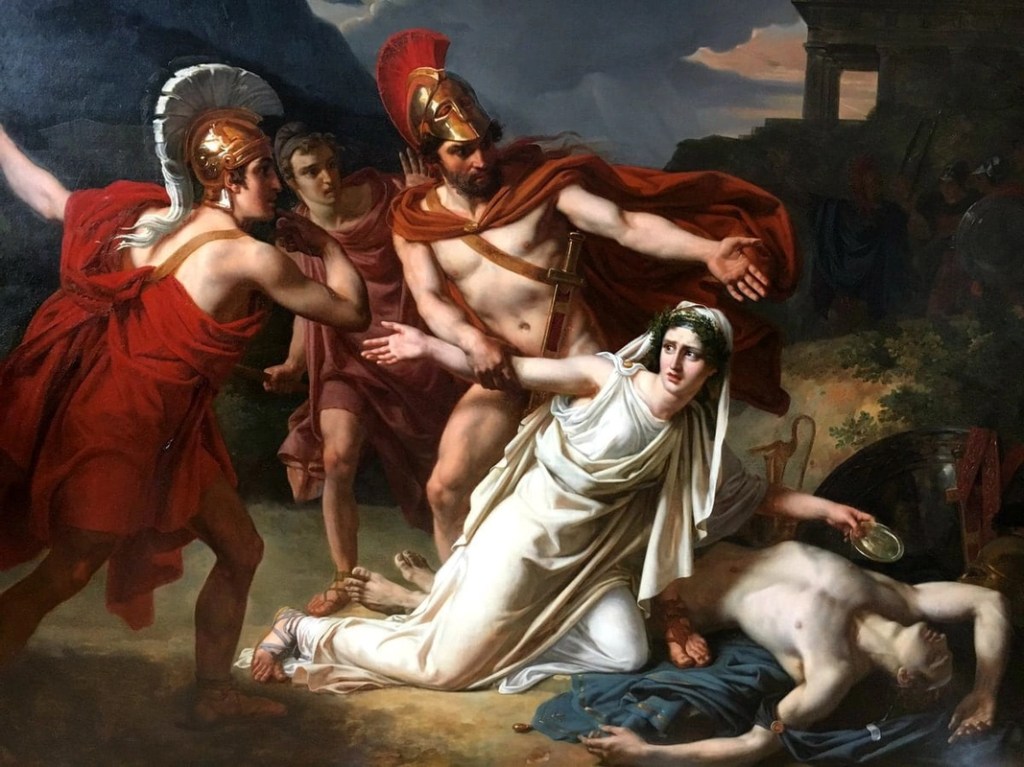
    Two of the most logical, philosophical, dialectical works of art–Sophocles’ Antigone and Reginald Rose’s Twelve Angry Me–seem to actually prove this point. Teaching Antigone was a revelation, both as a writer and teacher. Antigone seems deeply philosophical and dialectical. Antigone seems to represent the Justice of the gods, true Justice, while Creon represents the justice of the state, a lowercase, flawed kind of justice. The two are at odds with each other and have several exchanges over which form of justice is knowable and must be followed. The entire thrust of the narrative is the thrust of this argument. And yet, as Antigone is sentenced to death, she gives this monologue:

    “Yet he who thinks will praise what I have done.
    Never, were I a mother and my son
    Lay dead, were I a wife and he that died
    My husband, never had I so defied
    My City’s will. Ye ask me on what ground?
    A husband lost, another might be found;
    Another son be born if one were slain.
    But I, when Hades holds my parents twain,
    Must brotherless abide for evermore.
    Therefore I did thee honour, and therefore:
    Hath Creon called me mad, my brother, yea,
    A doer of evil. And I am led away
    Unwed, unsung, robbed of the love that should
    In right be mine and joy of motherhood.
    Friendless, by fate accursed, with my breath
    Yet warm, they cast me to the House of Death.”

    Antigone doesn’t care about her logical arguments about Justice. She loved her brother. That’s all, and that’s what she was willing to risk it all for. She would not have done it for a husband, or her own child had she any. She did it for her brother, for never would she have another brother. It’s quite a strange and cruel, yet also true and lovely, sentiment, all twisted and gnarled. She seems to have used reason about divine Justice and the gods, merely as a cover-up to her true, strange, foreign intentions. Here, the mystery of the human heart is laid bare, and we can only step back in silent wonder.

    A similar moment is found in Twelve Angry Men. At the end of that film, only one juror, Juror 3, is holding out with a guilty verdict. Finally, he reveals why.

    “The whole thing about hearing the boy yell? The phrase was ‘I’m gonna kill you.’ That’s what he said. To his own father. I don’t care what kind of man that was. It was his father. That goddamn rotten kid. I know him. What they’re like. What they do to you. How they kill you every day. My God, don’t you see? How come I’m the only one who sees? Jeez, I can feel the knife goin’ in.”

    Juror 3 here is willing to sentence a young man to death because of his own fractured relationship with his own son. His heart is on full display for us, and soon after this pivotal moment, the movie ends. We have seen the human heart laid bare. There is little else to see.

    In each of these stories, and in any story worth anything, the human heart is laid bare, as is all of reality–in the movement of plot, in characterization, in sentence structure or shot framing, in how the story ends and how the story begins, all of it works together to reveal an entire way of seeing the world. This also, in part, explains why no two authors write the same story, even if the premise may be similar. The two authors have two ways of seeing the world by their two separate lives.

    I am sure in future posts I will address these issues one at a time, more specifically, but for now I can say that my writing and teaching has improved that I no longer teach literature as philosophy that’s fun to read, a statement which belittles philosophy and literature. After all, why read philosophy if fiction is more fun, and where does beauty go if all that matters is logical ideas?